
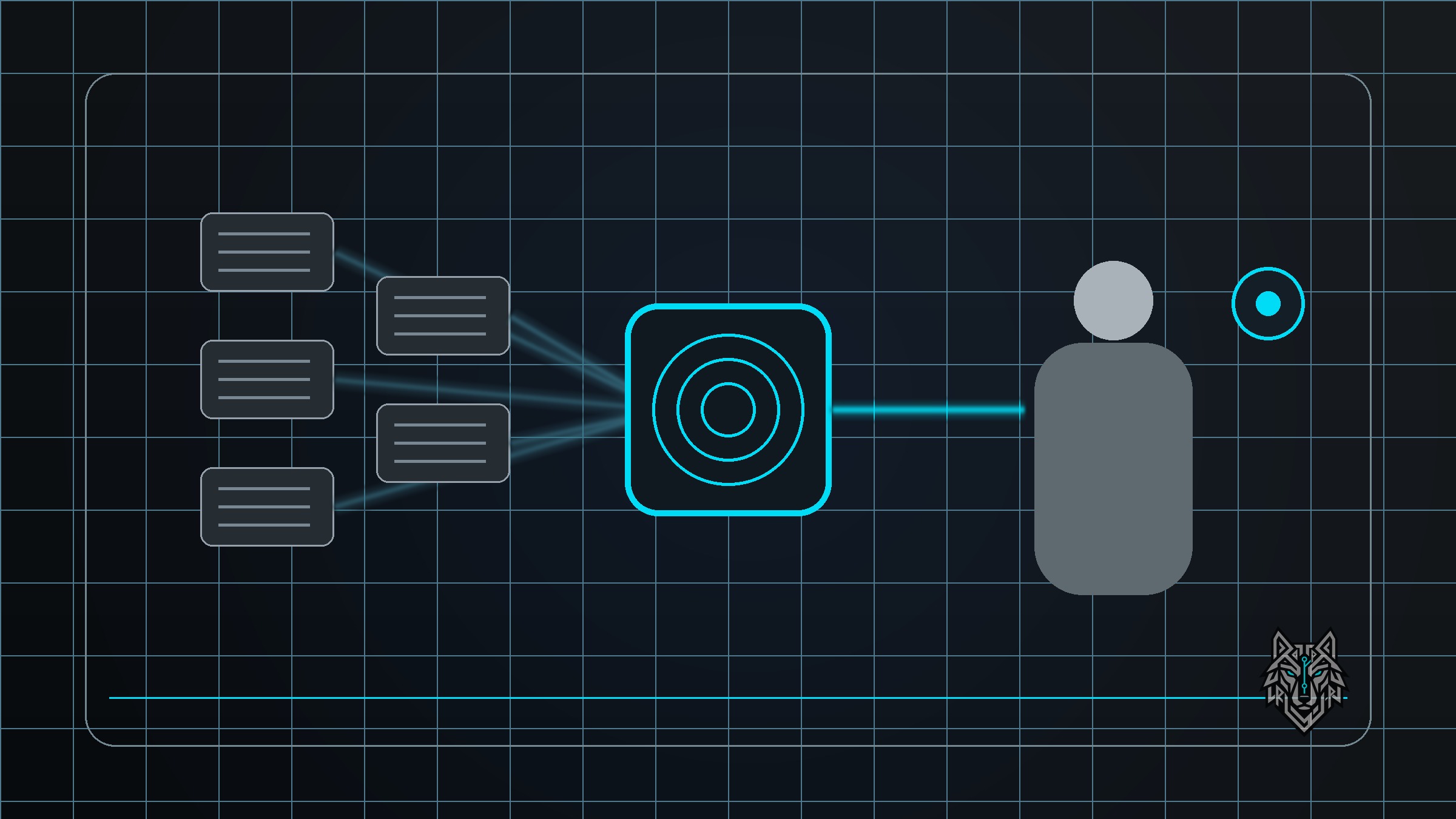
The best first automation is usually not the flashiest task—it is the boring, frequent, rule-based work that steals time every week and rarely benefits from human judgment.
Start With the Work Nobody Will Miss
Small businesses are surrounded by technology that promises transformation. AI assistants, autonomous agents, predictive analytics, marketing systems, chatbots, and industry platforms can all be useful. They can also distract from a much simpler opportunity.
The first automation target should usually be work that is repetitive, frequent, predictable, and low-risk: the kind of task that has to happen but does not become better because the owner personally clicks every button.
The U.S. Small Business Administration’s own guidance gives ordinary examples—calendar reminders, repeat tasks, inbox sorting, inventory updates, meeting summaries, and reusable templates. That is a good place to begin because the value is easy to observe.
Look for Repetition Before Intelligence
A practical automation inventory can start with one question: what did we do more than five times last week in almost the same way?
Common candidates include appointment scheduling, confirmation messages, invoice generation, payment reminders, lead intake, document naming, status notifications, data copying between systems, recurring reports, backup checks, inventory alerts, and routine customer follow-up.
These tasks are attractive because the process is already known. You are not asking software to invent a business decision. You are asking it to execute a stable rule consistently.
Automate the Handoff, Not Just the Task
Many small-business delays happen between tasks. A form arrives but nobody notices. A customer approves a quote but the invoice is not created. A payment clears but the project status is not updated. A support request sits in the wrong inbox.
Simple routing automation can remove more friction than a sophisticated model because it keeps work from waiting for someone to remember the next step.
Map the handoffs: what event should cause what next action, who needs to know, what record should update, and what exception needs human review?
Use AI Where Ambiguity Is the Bottleneck
Once the deterministic work is under control, AI becomes more useful. It can summarize unstructured messages, categorize requests, extract fields from documents, draft responses, search internal knowledge, or prepare a first version of content for human review.
The same risk principle still applies. A low-stakes draft can tolerate a different error rate than payroll, taxes, contracts, safety decisions, or irreversible customer actions. NIST’s AI Risk Management Framework is useful precisely because it treats AI behavior in the context of the actual use and impact.
Automation should become more sophisticated only when the business can explain why the sophistication is needed.
A Five-Step First Pass
For each recurring task, record its frequency, time cost, error cost, decision complexity, and the systems it touches. Automate the tasks that are frequent, time-consuming, rule-based, and easy to verify.
Then keep a human exception path. Measure whether total work actually falls. If the automation creates more corrections, support, or customer confusion than it removes, fix the process before adding more technology.
Small businesses do not need to automate everything. They need to stop spending valuable human attention on work that a reliable system can do quietly in the background.